"Ready to leap," Farm to Food Security Grant Helps Grow Food as Medicine in Cook County
October 21, 2026
Since 2024, the Northwoods Food Project (NFP) has been building connections between local farms and Cook County residents who need fresh food. Their work on the new Food as Medicine program is one example of momentum building among members of the Cook County Food Access Council, who have been working in various ways to strengthen local food systems and make healthy food more accessible.
The Council brings together elected officials, food producers, community members, and representatives from community organizations like NFP, as well as Sawtooth Mountain Clinic, Cook County Food Shelf, University of Minnesota Extension, Cook County YMCA, and the Northeast Statewide Health Improvement Partnership (NE SHIP). Each organization leads their own work, Council members bring updates and insights to the group, and partners learn together from the range of knowledge at the table and collaborate where they can.
For NFP, the work started with a question: where do food and nutrition security meet agricultural development in Cook County? In 2024, a grant from the Cook County Public Health Fund allowed Director Kate Cowie-Haskell to start exploring answers. That work led to additional funding from the Northland Foundation and Empty Bowls, which helped NFP start to build the Food as Medicine program. “Then, we were ready to leap when the Farm to Food Security funding became available,” said Sarah Waddle, an NFP board member and UMN Extension Educator.
The Farm to Food Security Grant from the Minnesota Department of Agriculture helps organizations buy food grown and raised in Minnesota and share it at no cost with people experiencing food insecurity. This funding made the first year of Food as Medicine possible in Cook County.
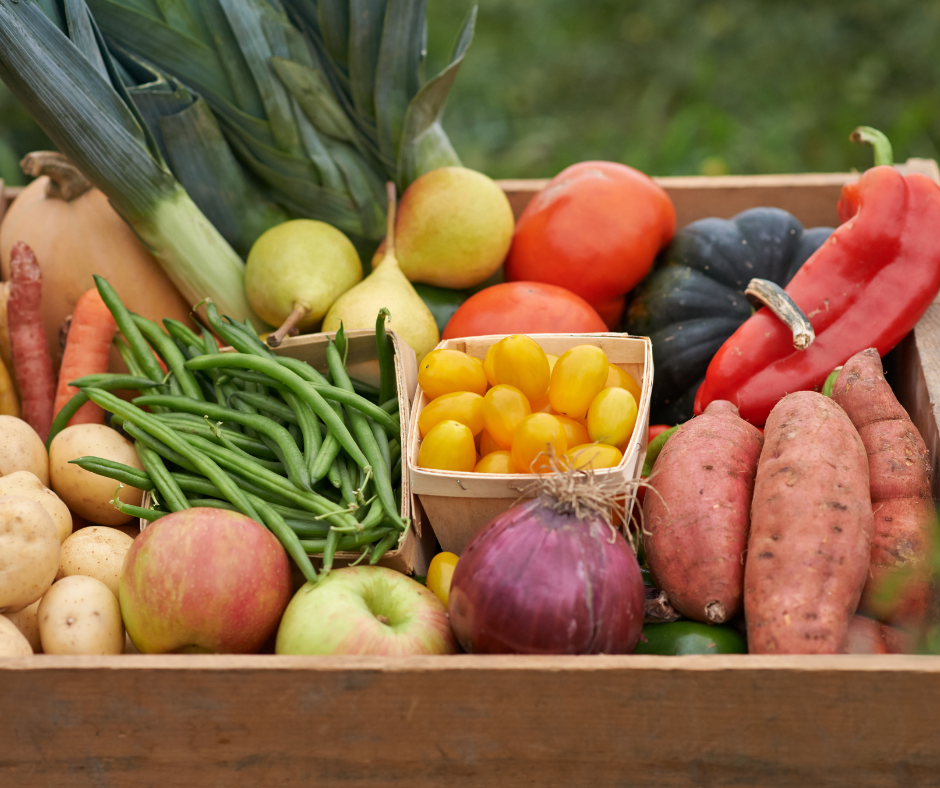
Food as Medicine connects patients at Sawtooth Mountain Clinic (SMC) with fresh, locally grown food, and a health and wellness coach. “It’s been a great opportunity for providers to give patients a concrete, no-expense way to take steps to support their own health,” said Liv Thompson, Outreach Coordinator with SMC. Each week, participants receive about $40 worth of food, plus specialty items like locally butchered chicken, maple syrup, and wild rice. NFP makes this possible by aggregating what’s available from local farms. And the program is already showing results: one provider described a patient’s improved diabetes measurements and attributed the change to Food as Medicine.
Kate sees the program as part of a culture shift. “What happens in the world when we think about food as medicine,” they asked, “beyond what our traditional medical system defines as medicine—as something that makes it possible for us to be healthy and well?” The project is also an effort to strengthen networks and infrastructure that support local farmers, while improving economic health, food literacy, and knowledge of how food is grown. “If farmers know about the opportunity to grow for Food as Medicine,” explained Dave Mills, NFP Board Member and Cook County Commissioner, “they can find out what people want, and plan for that.”
NFP has enough funding to run the program again next year and hopes to expand, possibly adding things like gas cards for participants. Kate is now compiling participant survey data, and results will inform next steps.
Other Council members are improving food access in their own ways. Produce purchased from local farmers also reaches residents through the Cook County Food Shelf. Anne Hegg, volunteer with the Food Shelf, described seeing people getting exposure and access to healthy foods they wouldn’t previously have seen there, with NFP helping with the logistics of moving and storing leftover produce.
Vital North, as part of its broader mission of fostering health and wellbeing, walks alongside the group as a partner and sometimes supports as a fiscal host. When they had the opportunity to take on the Pack n Pantry program, an initiative that sends food home with students from school, Vital North grew participation from 22 students in 2025 to 153 in 2026, also expanding the reach of vouchers for fresh fruit and vegetables funded by Cook County Food Shelf. Vital North is now exploring funding a protein voucher.
“It’s important, if you want to see something happen, to show up and be part of the change and bring ideas,” said Kelsey Rogers Kennedy, Council Member and Program Director with Cook County Higher Education. Food looks different to everyone. Anyone’s insights can help to expand the work. The Cook County Food Access Council meets on the first Wednesday of each month from 1:30-3:00 p.m. at Cook County Higher Education, with a virtual option. Everyone is welcome. Contact Kristina Campbell Mattson (Cook County SHIP Coordinator) at kristina.mattson@cookcountymn.gov to join the email list or receive the Zoom link.